📌 TL;DR
The ODR full form is Online Dispute Resolution, a digital framework that helps resolve commercial disputes outside the traditional court system.
For fast, legally binding dispute resolution, enterprises use CADRE, India’s simplest online dispute resolution platform, to bypass court backlogs and secure cash flows entirely online.
Delayed payments strain cash flow, disrupt operations, and weaken commercial relationships. As digital transactions and B2B commerce grow, businesses need faster, more efficient ways to resolve payment disputes.
Online Dispute Resolution (ODR) offers a structured digital process that can help parties settle eligible disputes and recover dues more efficiently.
What is ODR and how does it work?
The ODR full form is ‘Online Dispute Resolution’. It’s a digital way to resolve money and contract problems outside of a traditional court.
It moves alternative dispute resolution (ADR) into a simple online pipeline, helping parties settle clashes without hiring expensive lawyers.
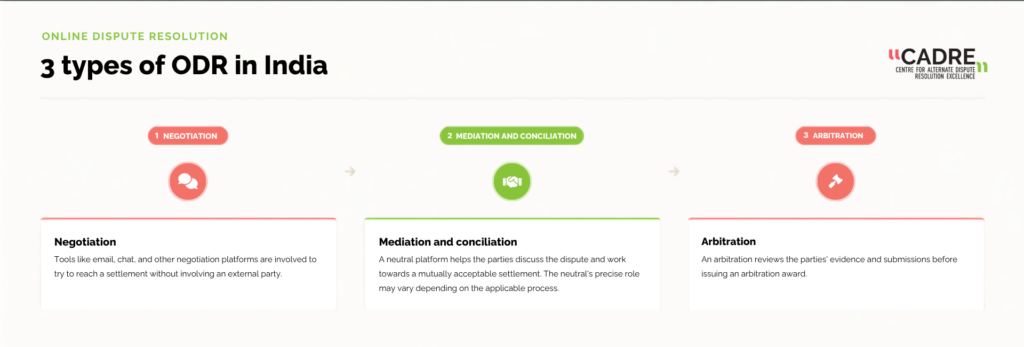
3 types of ODR in India
Depending on the nature of the dispute and the framework being used, ODR may involve one or more of the following processes:
- Negotiation: Tools like email, chat, and other negotiation platforms are involved to try to reach a settlement without involving an external party.
- Mediation and conciliation: A neutral platform helps the parties discuss the dispute and work towards a mutually acceptable settlement. The neutral’s precise role may vary depending on the applicable process.
- Arbitration: An arbitrator reviews the parties’ evidence and submissions before issuing an arbitral award. Add an arbitration clause in your agreement beforehand.
Parties should understand the difference between mediation and arbitration before choosing a dispute-resolution process.
6 online dispute resolution benefits in India
The growth of ODR in India is backed by strict rules from the Reserve Bank of India (RBI) and the Securities and Exchange Board of India (SEBI). These boards protect users in online dispute resolution cases in India.
The potential online dispute resolution benefits in India include:
- Greater accessibility for parties in different locations
- Reduced travel and administrative costs
- Faster communication and document exchange
- Convenient online case tracking
- More consistent handling of high-volume disputes
- Flexible processes that may be adapted to the nature of the dispute
For instance, if a UPI or bank transfer fails and your money is debited, RBI rules say payment apps must include an ODR system.
The app is legally required to give you an online tracking number so you can check your complaint in real time.
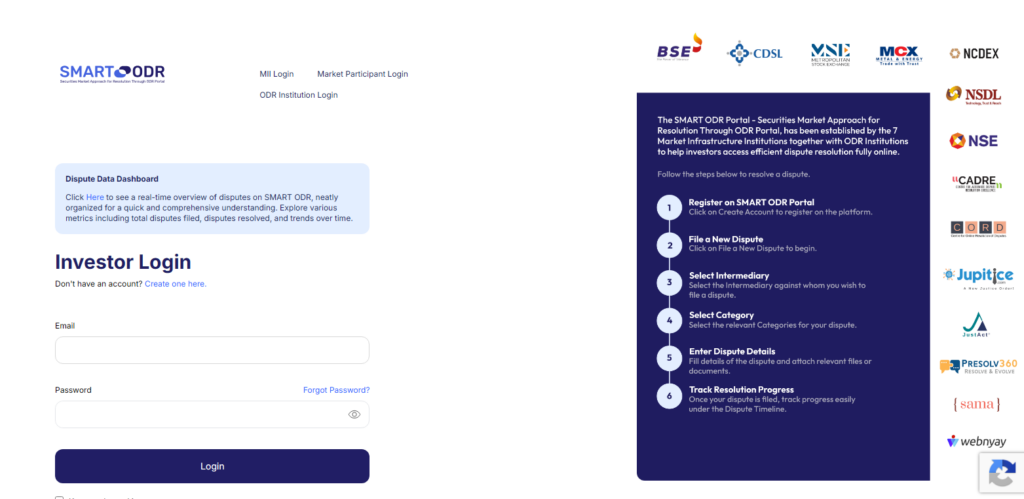
In the stock market, investors use SEBI’s official SMART ODR portal to challenge brokers or listed companies directly. They route unresolved complaints to CADRE and other enlisted ODR platforms.
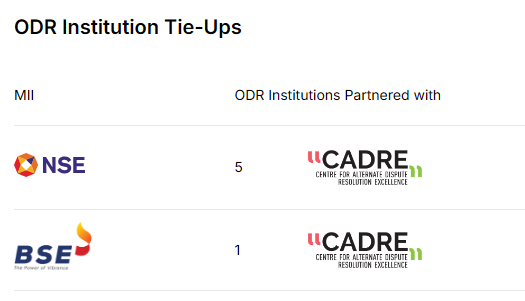
For volume recoveries, CADRE, India’s simplest online dispute resolution platform, manages compliance seamlessly while maintaining a strict human-in-the-loop protocol for every binding decision.
Safeguarding small businesses through the MSME ODR platform
For small businesses, MSME ODR automates the payment protections given by the Micro, Small and Medium Enterprises Development (MSMED) Act, 2006.
This framework helps smaller suppliers recover money and fixes cash flow issues caused by an MSME delayed payment.
Under this law, a buyer must pay an MSME invoice by the agreed date, which cannot be more than 45 days.
If they miss the deadline and an MSME payment complaint is raised, they must pay a 3-times monthly compounding interest.
Conclusion: Resolving commercial disputes
Online dispute resolution offers a fast, cheap, and legally binding alternative to backlogged courts.
By adopting a trusted platform like CADRE, Indian enterprises secure their cash flows, meet strict regulatory mandates, and resolve commercial disputes within days.
FAQs for ODR full form
In finance, the ODR full form means Online Dispute Resolution. It digitally settles financial complaints like failed UPI transactions or stockbroker disputes outside court.
An ODR platform is a private digital system that businesses use to resolve payment delays, contract clashes, and vendor disputes without expensive litigation.
ODR platforms are digital systems that help parties resolve disputes online through structured processes such as negotiation, mediation or conciliation, and arbitration.
In law, ODR is the use of technology as an important part of a dispute-resolution process such as negotiation, mediation, conciliation or arbitration.
In finance, the ODR full form means Online Dispute Resolution. It digitally settles financial complaints like failed UPI transactions or stockbroker disputes outside court.
In business, ODR is an online method of addressing payment, contract, vendor, customer or service-related disputes without requiring every stage to take place in person.
ODR platforms are digital systems that help parties resolve disputes online through structured processes such as negotiation, mediation or conciliation, and arbitration.
ODR itself is not automatically legally binding. The legal effect depends on the process used and the resulting settlement, agreement or arbitral award.